
ECD Logo Flat - Transparent
$0.00 0

Cart

No products in the cart.

DJI Agras T50

$24,200.00

DJI Agras T50

SKU: DJIAG-T50 Categories: ,

Description

DJI Agras T50


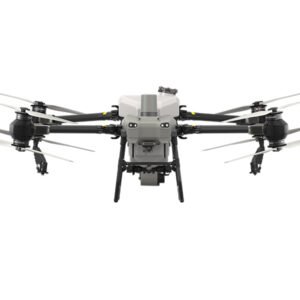
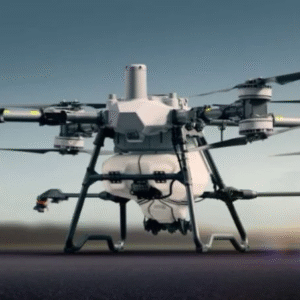
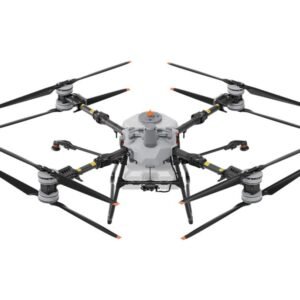
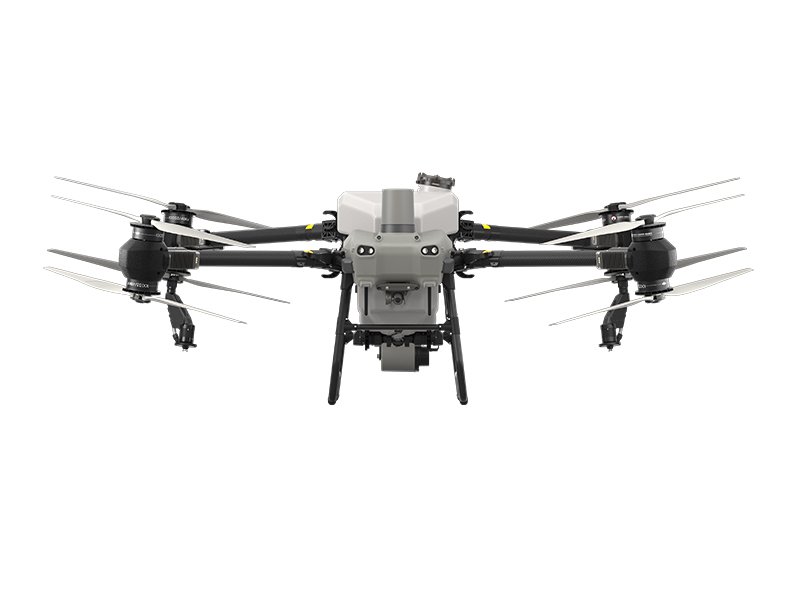
DJI AGRAS T50 elevates drone agricultural operations to new heights. It inherits a powerful coaxial twin-rotor propulsion system and a split-type torque resistant structure for next level stability when carrying 40 kg spraying[1] or 50 kg spreading[1] payloads.
DJI AGRAS T50 leverages a Dual Atomizing Spraying System, Front and Rear Phased Array Radars, and a Binocular Vision System. DJI AGRAS T50 excels across multiple scenarios, from surveying[2] to spraying and spreading, guaranteeing stable operations and steady performance.


Heavy Payload

40 kg spraying[1]
50 kg spreading[1]

High Flow Rate

Spraying 16 L/min[3]
Spreading 108 kg/min[4]

Signal Stability

Offline operations
2 km O3 Transmission
Optional DJI Relay
All Scenario Adaptability

Fully automatic and manual operation
Orchard Mode
Variable Rate Application

Multidirectional Obstacle Sensing[6]

Multidirectional Obstacle Avoidance
Terrain Following up to 50°

Four Sprinkler Kit (Optional)

Reverse Directional Spray During Flight
4-sprinkler spraying, flow rate 24 L/min[3]


50 kg Payload[1]

75 L max capacity and an expanded loading gate for quick refills.

Smooth Spreading

The torque of the spreader is doubled and the discharge hatch is enlarged to enable a flow rate up to 108 kg/min[4].

Uniform Spreading

DJI AGRAS T50’s spiral channel spinning disk makes spreading more uniform.

Low Rate Spreading

You can also switch to small hopper gates to improve spreading accuracy with a low flow rate.

Real-Time Weighing

DJI AGRAS T50 is equipped with a weighing sensor which allows you to monitor the remaining payload in real time.

Fast Disassembly and Cleaning

The spreader can be quickly disassembled and cleaned for easy maintenance.


Double your peace of mind
with Binocular Vision and Dual Radar

DJI AGRAS T50 is equipped with front and rear Active Phased Array Radars with double the number of RF channels[17] for higher detection precision. Together they enable Multidirectional Obstacle Sensing[6], elevating operating safety. Two sets of Binocular Vision sensors enable DJI AGRAS T50 to accurately sense terrain and depict obstacles in detail, for automatic obstacle bypassing[11] and Terrain Following[11] over steep slopes.


One drone for surveying[2], spraying, and spreading

DJI AGRAS T50 integrates aerial surveying[2], spraying, and spreading into a single drone. A high-resolution FPV gimbal camera enables real-time capture of field and orchard images. Paired with DJI RC Plus and RTK service, you can generate high definition maps which underpin subsequent automatic flight routes. DJI AGRAS T50 can take off and perform automatic operations, all at the push of a button.

Orchard Aerial Survey[2]

DJI AGRAS T50 supports obstacle bypassing and Terrain Following for surveying[2] of orchards on slopes up to 20°[5]. With DJI RC Plus and its real-time mapping capabilities, it can automatically identify fruit trees and obstacles. Based on the distribution of the fruit trees, it can generate accurate and fully automatic 3D flight routes.

5 hectare orchard mapped in 10 minutes[12]

Orchard 3D Map


Specs T50

Aircraft

  • Weight

  • 39.9 kg (excl. battery)
    52 kg (incl. battery)
  • Max Takeoff Weight[1]

  • Max takeoff weight for spraying: 92 kg (at sea level)
    Max takeoff weight for spreading: 103 kg (at sea level)
  • Max Diagonal Wheelbase

  • 2200 mm
  • Dimensions

  • 2800×3085×820 mm (arms and propellers unfolded)
    1590×1900×820 mm (arms unfolded and propellers folded)
    1115×750×900 mm (arms and propellers folded)
  • Hovering Accuracy Range (with strong GNSS signal)

  • RTK enabled:
    Horizontal: ±10 cm, Vertical: ±10 cm
    RTK disabled:
    Horizontal: ±60 cm, Vertical: ±30 cm (radar module enabled: ±10 cm)
  • RTK/GNSSOperating Frequency

  • RTK:
    GPS L1/L2, GLONASS F1/F2, BeiDou B1I/B2I/B3I, Galileo E1/E5b, QZSS L1/L2
    GNSS:
    GPS L1, GLONASS F1, BeiDou B1I, Galileo E1, QZSS L1
  • Max Configurable Flight Radius

  • 2000 m
  • Max Wind Resistance

  • 6 m/s

Propulsion System – Motors

  • Stator Size

  • 100×33 mm
  • KV

  • 48 rpm/V
  • Power

  • 4000 W/rotor

Propulsion System – Propellers

  • Material

  • Nylon carbon fiber filament
  • Dimension

  • 54 in (1371.6 mm)
  • Propeller Rotation Diameter

  • 1375 mm
  • Quantity

  • 8

Dual Atomizing Spraying System – Spray Tank

  • Material

  • Plastic (HDPE)
  • Volume

  • 40 L
  • Operating Payload [1]

  • 40 kg[1]
  • Quantity

  • 1

Dual Atomizing Spraying System – Sprinklers

  • Model

  • LX8060SZ
  • Quantity

  • 2
  • Nozzle Distance

  • 1570 mm(Rear Nozzles)
  • Droplet Size

  • 50-500 μm
  • Effective Spray Width [2]

  • 4-11 m (at a height of 3 m above the crops)

Dual Atomizing Spraying System – Delivery Pumps

  • Type

  • Impreller pump (magnetic drive)
  • Quantity

  • 2
  • Single Pump Flow Rate

  • 0-12 L/min
  • Max Flow Rate

  • 16 L/min (2 sprinklers); 24 L/min (4 sprinklers)

T50 Spreading System

  • Compatible Material Diameter

  • 0.5-5 mm dry granules
  • Spread Tank Volume

  • 75 L
  • Spread Tank Internal Load [10]

  • 50 kg
  • Spread Width

  • 8 m

Phased Array Radar System

  • Model

  • RD241608RF (forward phased array radar); RD241608RB (rear phased array radar)
  • Terrain Follow

  • Max slope in mapping-free operation: 50°
    Altitude detection range: 1-50 m
    Stabilization working range: 1.5-30 m
  • Obstacle Avoidance [4]

  • Obstacle sensing range (multidirectional): 1-50 m
    FOV:
    Forward phased array radar: horizontal 360°, vertical ±45°, upward ±45° (cone)
    Rear phased array radar: vertical 360°, horizontal ±45°
    Working conditions: flying higher than 1.5 m over the obstacle at a horizontal speed no more than 10 m/s and vertical speed no more than 3 m/s.
    Safety limit distance: 2.5 m (distance between the front of propellers and the obstacle after braking)
    Sensing direction: 360° multidirectional sensing

Binocular Vision System

  • Measurement range

  • 0.5-29 m
  • Effective Sensing Speed

  • ≤10 m/s
  • FOV

  • Horizontal: 90°, Vertical: 106°
  • Operating Environment

  • Adequate light and discernible surroundings

Remote Controller

  • Model

  • RM700B
  • Operating Frequency [5]

  • 2.4000-2.4835 GHz, 5.725-5.850 GHz
  • Max Transmission Distance

  • 7 km (FCC), 5 km (SRRC), 4 km (MIC/CE); (unobstructed, free of interference, and at an altitude of 2.5 m)
  • Wi-Fi Protocol

  • Wi-Fi 6
  • Wi-Fi Operating Frequency [5]

  • 2.4000-2.4835 GHz, 5.150-5.250 GHz, 5.725-5.850 GHz
  • Bluetooth Protocol

  • Bluetooth 5.1
  • Bluetooth Operating Frequency

  • 2.4000-2.4835 GHz
  • GNSS

  • GPS+Galileo+BeiDou
  • Screen

  • 7.02-in LCD touchscreen, with a resolution of 1920×1200 pixels, and high brightness of 1200 cd/m2
  • Operating Temperature

  • -20° to 50° C (-4° to 122° F)
  • Storage Temperature Range

  • Less than one month: -30° to 45° C (-22° to 113° F)
    One to three months: -30° to 35° C (-22° to 95° F)
    Six months to one year: -30° to 30° C (-22° to 86° F)
  • Charging Temperature

  • 5° to 40° C (41° to 104° F)
  • Internal Battery Runtime

  • 3 hours 18 minutes
  • External Battery Runtime

  • 2 hours 42 minutes
  • Charging Type

  • It is recommended to use a locally certified USB-C charger at a maximum rated power of 65 W and maximum voltage of 20 V such as the DJI 65W Portable Charger.
  • Charging Time

  • 2 hours for internal battery or internal and external battery (when remote controller is powered off and using a standard DJI charger)

DB1560 Intelligent Flight Battery

  • Model

  • DB1560 Intelligent Flight Battery (BAX702-30000mAh-52.22V)
  • Weight

  • Approx. 12.1 kg
  • Capacity

  • 30000 mAh
  • Nominal Voltage

  • 52.22 V

C10000 Intelligent Power Supply

  • Model Number

  • CSX702-9500
  • Dimensions

  • 400 × 266 × 120 mm
  • Weight

  • Approx. 11.4 kg
  • Input/Output

  • Input (Main): 220-240 VAC, 50/60 Hz, 24 A MAX
    Input (Auxiliary): 220-240 VAC, 50/60 Hz, 24 A MAX
    Output: 59.92 VDC MAX, 175 A MAX, 9000 W MAX
    Input (Main): 100-120 VAC, 50/60 Hz, 16 A MAX
    Input (Auxiliary): 100-120 VAC, 50/60 Hz, 16 A MAX
    Output: 59.92 VDC MAX, 60 A MAX, 3000 W MAX
  • Charging Time[11]

  • Fully charges a battery in 9 to 12 minutes (DB1560 Intelligent Flight Battery)
  • Protection Functions

  • Over-voltage, over-charge, under-voltage and over-temperature protection.
  • Charging Safety

  • AC wire protection, power wire protection, and charge connector protection

Relay

  • Model

  • RL01-65
  • Dimensions

  • 120×110×100 mm
  • Weight

  • ≤575 g
  • Input Voltage [6]

  • 9 V3 A / 12 V2.5 A / 15 V2 A
  • Power Consumption

  • 9 W (SRRC), 12 W (FCC)
  • Capacity

  • 6500 mAh
  • Operating Time

  • 4 hours
  • Operating Frequency [5]

  • 2.4000-2.4835 GHz, 5.725-5.850 GHz
  • Max Transmission Distance

  • 5 km (SRRC), 4 km (MIC/KCC/CE), 7 km (FCC)
    (unobstructed, free of interference, and at a flight altitude of 2.5 m)
  • Charging Time

  • 2 hours and 20 minutes (when using a standard DJI charger)
  • IP Rating [6]

  • IP55

Definition

  • [1] Data was measured at sea level. The payload weight is greatly affected by the ambient temperature and altitude. The payload weight needs to be reduced by 10 kg for every 1,000m increase in altitude. The DJI Agras app will recommend the payload weight according to the current status and surroundings of the aircraft. When adding materials, the maximum weight should not exceed the recommended value, otherwise flight safety may be compromised.
    [2] The spray width of the spraying system depends on the operating scenario and demand for coverage evenness.
    [3] The spread width of the spreading system depends on the operating scenario and demand for coverage evenness.
    [4] The effective sensing range and its ability to avoid and bypass obstacles will vary depending on the ambient light, rain, fog, and the material, position, shape, and other properties of the obstacles. Downward sensing mainly assists in Terrain Follow and Altitude Hold. The sensing in other directions is used for Obstacle Avoidance.
    [5] 5.8 GHz frequency is unavailable in some contries. Check local regulations for more information.
    [6] Use chargers or external power supplies that meet the specifications. Otherwise, the device may not work normally.
    [7] The protection rating may be reduced due to improper use and damage caused by external forces or environmental factors.
    [8] The actual power and voltage may vary according to local regulations.
    [9] Measured using RON 92 gasoline at near sea level with an ambient temperature of 25° C, while charging at 9 kW.
    [10] The DJI Agras app will intelligently recommend the payload weight limit for the spread tank according to the current status and surroundings of the aircraft. DO NOT exceed the recommended payload weight limit when adding material to the spread tank. Otherwise, the flight safety may be affected.
    [11]Factors impacting charging time: Altitude of the charging station; Charging cable meets requirements for fast charging; Battery cell’s temperature is in the range of 15° to 70° C (59° to 158° F)

Additional information

Brand

Model

Category

Reviews

There are no reviews yet.

Be the first to review “DJI Agras T50”

Your email address will not be published. Required fields are marked *